
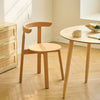


Wooden chairs
The wood gives the chair a familiar presence, with subtle tones, natural grain and lines that transcend styles. In our collection of dining room chairs, Nordlys wooden chairs accompany everyday meals with natural warmth. Species, finish, shape of the backrest and seat material: choose the combination that matches your interior and your way of sitting at the table.
Which species of wood to choose for a chair?
Each species has a particular appearance. The pattern of the grain, the natural color and the way in which the finish reveals them influence the character of a chair. To compare the models, observe these details alongside the furniture you already own.
Read the material specifications carefully too. A chair can combine solid wood with other elements, or bring together several materials in its back and seat. The product details allows you to distinguish the components. The choice of species is therefore accompanied by attention to the joints, dimensions and intended conditions of use.
Ash and beech, durable woods for everyday use
Ash is often distinguished by an expressive grain, which gives movement to visible surfaces. It goes well with Scandinavian silhouettes when its natural nuances remain apparent. Beech generally has a more even grain and lends itself to understated lines, depending on the work of the finish.
These species can participate in structures adapted to daily life, but the strength of a chair depends on its complete design. Look at the thickness of the legs, the joints and the specified maximum load. For decoration, also compare the actual colour of the chair with your floor or table: a finish can significantly modify the natural appearance of the wood.
Rubberwood and acacia for warm shades
Rubberwood has a naturally fairly light base, which can receive different finishes. It fits easily into a bright palette or into a more intense atmosphere when the wood is stained. Acacia is often recognized by more marked contrasts and nuances, which should be assessed on the specific model.
These variations are part of the character of wooden furniture. To associate them with your interior, choose a common thread rather than perfect uniformity: a family of shades, a matte finish or a shape of base. When you order several pieces, slight differences in appearance can emphasize the living nature of the material.
Wood, cane or fabric seat: finding the right comfort
Wood defines the visual structure of the chair, but the seat determines a large part of the experience at the table. An all-wood surface provides firm contact; a textile covering adds another sensation. The cane weaving and woven materials introduce yet another different relief.
To choose, start from the usual duration of meals and your preferences. Measure the available height under the tabletop, then compare the depth of the seat and the profile of the backrest. These proportions are as important as the material to feel comfortable.
The wooden seat for a clean and robust line
A wooden seat naturally extends the design of the structure. It highlights the curves, connections and finish of the seat, with a simple presence around the table. The Scandinavian wooden chairs offer several avenues for exploring this refined aesthetic.
Comfort is based in particular on the shape of the seat and the shape of the backrest. Look at their inclination and usable dimensions. For daily use, a smooth and accessible surface can also simplify routine cleaning, provided you respect its finish. A soft cloth and rapid intervention on traces of liquid help preserve its appearance.
Wood associated with fabric, rattan or cane weaving
The fabric warms the contact and allows a color to be introduced around the tabletop. Combined with a wooden structure, it creates a welcoming chair whose character varies with the weaving and padding. A light shade softens the whole, while a deeper color highlights the silhouette.
The rattan and cane weaving provide a natural texture, sometimes openwork, which visually lightens the backrest. They accompany retro atmospheres as well as contemporary interiors. Distinguish the material of the weaving and the composition of the other elements to choose an appropriate care routine.
Around wooden dining tables, these associations allow you to vary the textures without multiplying the colors. The top and the chairs can share a tone while maintaining different grain patterns and lines.
A wooden chair for every room in the house
In the dining room, the wooden chair naturally accompanies a family table. Check the number of seats taking into account the width of each seat, the table legs and the clearance needed behind the chair. A chair placed in an entrance or a bedroom can also provide occasional seating and complete the decoration.
For working, the wooden office chairs offer characteristics to be examined depending on the frequency of use and the desk height. Around an island, the wooden bar stools respond to another installation height. Choose each seat according to its actual use.
Wooden poufs can finally take up the material in the living room. In a house where functions intersect, a few touches of wood connect the rooms without imposing the same piece of furniture everywhere.
Finish, maintenance and durability of a wooden chair
The finish protects and transforms the appearance of the wood. A varnished, oiled or otherwise treated surface does not require the same products: follow the recommendations corresponding to the model. Dust with a soft cloth and wipe off liquids quickly, without allowing water to stagnate at the joints.
Keep chairs away from direct heat sources and avoid prolonged exposure to sunlight. Suitable glides protect the floor when moving. Lift the seats to move them and check the fixings according to the assembly instructions.
When FSC certification appears in the characteristics, it provides information about the wood used. Long-term durability also depends on the choice of suitable furniture and the care taken over time. To extend this reflection, discover the life cycle of our products. The wood can thus retain its nuances and develop a patina that accompanies the life of the house.