

Are you preparing for the arrival of a baby? Are you already a parent and want to renovate your daughter's or son's room? The only problem is, you have no idea where to start?
It's difficult to create a space where your child can play, draw, sleep, but also be tidy and organized. That's why it's important to carefully consider this special bedroom, this little haven for your child.
Discover our 8 tips for decorating your child's room.
1. Opt for a soft and soothing color
We now know that colors have an impact on our moods. Red, for example, is a color to avoid in a bedroom because it is too stimulating. Opt instead for softer, more soothing colors, such as sky blue, beige, light gray, or even powder pink.
Opt for pastel shades for an even more harmonious result. And do so in a gender-neutral way! Pink can look beautiful in a boy's room just as much as in a little girl's room.
Choose the colors you like, without limiting yourself because of stereotypes. Give free rein to your creativity: mustard yellow, khaki, cream, and gray are all trendy and pleasant colors for a child's room.
Check out our article on choosing colours: How to choose the right color palette for your interior decoration?
Don't forget to play with lighting, which brings out the colors and allows you to create different moods. Soft light on the bedside table or a small firefly for the evening are all elements that help to create a warm and soothing atmosphere.
2. Don't overload the room with furniture
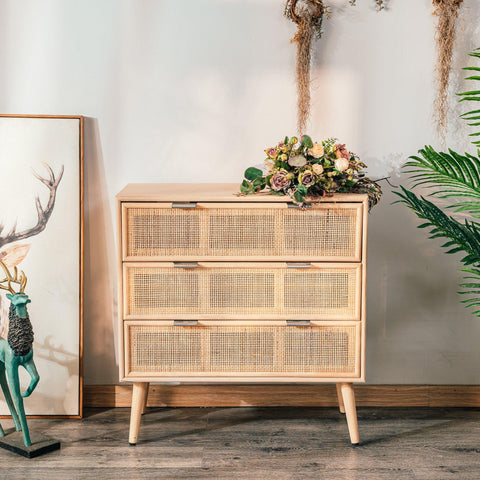
To create a calm atmosphere in your child's room, avoid cluttering it with too much furniture and objects. Too much can feel oppressive. Keep it simple: a bed, a convenient for clothes, a toy chest, a small bedside tableDepending on the age, a changing table.
Keep in mind that a minimalist decorating style will be more conducive to a good night's sleep and therefore a good rest for your child.
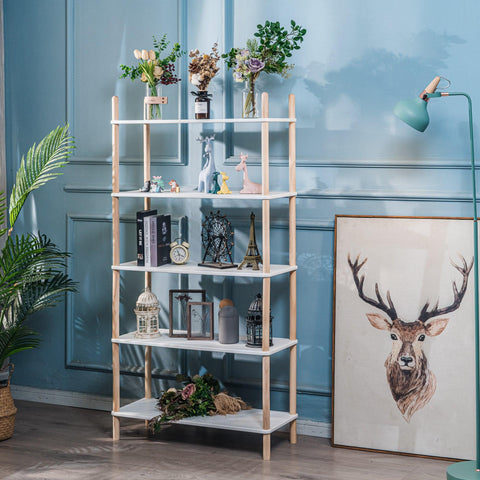
To add a decorative touch, a small shelf That will do the trick. However, avoid covering the walls with paintings or posters! Keep it simple and pay close attention to what you hang above your child's bed. Two or three pictures can stimulate your child's imagination and creativity, so choose them wisely!
Depending on the type of flooring in your child's room, add a rug to delimit their play area or cushion the impact of a fall.
3. Have practical storage solutions - Furniture that encourages a sense of organization
A child also means a lot of things to tidy up! It's a shame, then, to forget to create... storage in their rooms. For their toys, their clothes, books, diapers, products, and then what our little ones accumulate: the stuffed animal from their birth that they wouldn't throw away for anything in the world. In short, it adds up to a lot of accumulated stuff!
Always consider choosing furniture that you can reuse; it's not only more economical but also more environmentally friendly and sustainable. Your child will inevitably grow up, so choosing furniture that you also like offers the possibility of reusing it later.
So, from a very young age (and this applies to both boys and girls), start teaching your children about tidying up. Of course, make it fun! The concept of order is learned, but more importantly, it's seen! If things are scattered everywhere, without any logical place, how can they understand where to put everything?
In a tidy place, your child will learn that everything has its place: clothes in the convenientIn the right drawers, the books aboutshelfthe toys in the trunk or in the storage bench.
Choose furniture that's accessible and easy for him to use. In short, the more practical your furniture is, the more your children will want to keep things tidy!
4. How to choose the right bed for your child?
From ages 3 to 5, thankfully, there's no need to buy a new bed every year! A convertible bed adapts to your child's size. Again, in addition to being an economical solution, its environmental benefits are undeniable. Another advantage is that some models include several storage additional steps before switching to "big bed" mode.
Pay attention to the height of the bed: your child's independence depends on this. Will they be able to get up on their own, or will they need your help to get in and out of bed?
Here are some guidelines regarding the length of your child's bed:
- Before 2-3 years old: a convertible bed is the most advantageous
- For children aged 2 to 6: opt for a 70x140 cm bed
- Up to 8 years old: a 70x160 cm size may still be suitable
- Gradually increase to 180 cm as your child grows
Forget about loft beds or bunk beds before the age of 6. After that age, this type of bed offers a significant space saving, especially if you live in an apartment. The possibility of making a desk For example, placing it below allows you to enlarge the space in your child's room.
5. Involve your child
Imagine someone coming into your room and changing all your decor? Does that idea appeal to you?
It's the same with your child! The more you involve them in designing their little haven, the more comfortable they'll feel in it. They're old enough to understand the whole process: choosing colors, furniture, and materials. And they're old enough to have their own tastes!
Trust him and give space to his creativity and personality. He can then better take ownership of his space and, in particular, the concept of order that we discussed earlier in this article.
This arrangement work gives your child a responsibility, making them feel more “in charge” of their space, their “place”.
6. Choosing the materials
Your child's room should be harmonious so they feel comfortable. Natural materials are soothing and perfect for creating a warm atmosphere. Discover all our tips for creating a natural decor in This item.
There are several ways to incorporate natural materials into your child's room.
Choice of flooring materials:
- a wooden parquet floor with a natural fiber rug
- a neutral or wood-effect laminate floor with a rug
- A carpet reduces minor injuries but gets dirty quickly
Choice of textile materials:
- choose fabrics made of natural fibers preferably
- Also check what materials are used inside your furniture: the upholstery, for example. At Nordlys The fabrics used in our upholstery are OEKO-TEX certified as healthy and sustainable in composition.
7. Create specific activity zones
Your child's room is a bit like their home, "their apartments" as we would say! He builds his own universe there, according to his taste. In order for him to fully develop his creativity, we define spaces dedicated to certain activities.
- The play, arts and drawing corner
- The sleeping area
- The corner desk to work
- A relaxation and reading corner (away from noise if possible)
- The clothing corner thanks to a convenient
Each space can be delimited on the floor by rugs for example, on the walls by wallpaper or by using a different color.
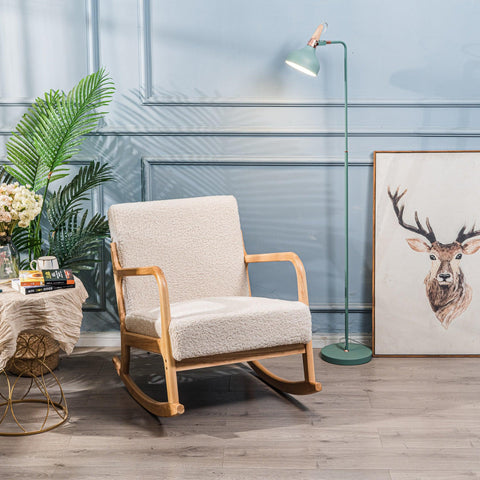
Finally, spaces can be defined by furniture. For example, a small armchair A child's room will create a reading nook. Carefully consider the layout to create a clean and uncluttered bedroom where the different areas are clearly defined.
And don't forget about yourself! You spend enough time in your child's room to afford the luxury of putting a... armchair comfortable rocking chair!
8. Focus on security
Finally, safety is a key element in the creation of your child's room.
The dangers are numerous and can be found almost anywhere. Therefore, you must pay attention to them:
- Secure the furniture firmly to the wall to prevent accidents
- Opt for non-toxic and durable materials for paints and floor coverings.
- Do not use cold finishes such as tiles
- Control access to windows and stairs, if any.
- Pay attention to the corners of the furniture
- Pay attention to the placement of heavy objects; avoid placing them at a height.
- Place electrical sockets high up, opt for socket covers or elliptical sockets which have child safety features.
Conclusion
To create a calming haven for your child, start by choosing soothing colors and natural materials. Avoid cluttering this space with furniture; it should remain uncluttered, functional, and practical.
If your child is old enough, involve them in decorating their room. Their tastes, as well as their sense of responsibility, will give them the tools to keep their space tidy and harmonious.
Pay particular attention to the choice of bed, the choice of flooring materials and the fabrics used.
Finally, create specific zones for each activity while thinking about how to secure the spaces. Up to you !


