
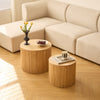


Solid wood coffee tables
A solid wood coffee table gives the living room a distinctive presence: the grain is visible in the material, shades bring the top to life and the furniture becomes part of household routines. Among our wooden coffee tables, this construction deserves a closer look to find a model suited to your needs. Species, construction, finish, shape and dimensions all contribute to the result. The Nordlys collection brings together the pleasure of a natural material and the practical demands of a space for relaxing, entertaining and everyday living.
Why choose a solid wood coffee table?
Solid wood attracts through its character and the possibilities it may offer over time. Its appeal goes beyond tabletop thickness or furniture weight, however. A coffee table should be stable, well-proportioned and suited to its intended activities. The material provides a foundation; design, finish and care determine how well the piece works in use.
A unique piece thanks to natural wood grain
Grain is one of wood's attractions. Lines, colour variations and natural details distinguish pieces even within the same species. They create an authentic presence, visible close up and across the living room. Photographs suggest the effect, but these variations explain why each tabletop may have its own shades.
To introduce this material, consider the existing furniture. Strong grain can become the focal point of a simple room. In an interior with several textures, a quieter pattern leaves more room for other elements. The right choice depends on the role you want the table to play in the arrangement.
Strength that lasts through the years
Solid wood furniture can support long-term use when correctly built and maintained. Strength depends on the joints, base, surface protection and respect for specified loads. Heavy furniture is not necessarily suitable for every purpose: a coffee table does not become a seat or step simply because it is solid wood.
Wood reacts to substantial changes in humidity and temperature. Keeping it away from strong heat, cleaning it appropriately and placing protection under objects help preserve it. This regular attention is easier than repairing avoidable damage and lets you enjoy the tabletop with greater peace of mind.
Solid wood or veneer: what are the practical differences?
Solid wood elements consist of wood throughout their thickness, sometimes joined from several pieces. Veneer is a thin layer of wood applied to another underlying material. Both can have genuine wood grain on the surface, but they do not offer the same treatment options when a mark appears. Check the technical information rather than relying on a photograph alone.
A table may also combine different constructions: a solid top, veneered parts or other materials, depending on the model. Check each element if you want a particular construction. The visible thickness of an edge does not always reveal the material's thickness, as the design may create an impression of extra volume.
Solid wood may allow certain restoration methods depending on its finish, condition and design. This does not mean sanding is always necessary or risk-free. Veneer needs particular care because it is thin. In both cases, identify the surface and recommendations before acting. An informed choice matches your needs rather than assuming one construction suits every interior.
Which solid wood species should you choose for your living room?
Choose a species for its visual character while also considering the finish and the furniture's surroundings. Grain, undertones and natural variations give the tabletop its presence. Compare detail views and composition information. The same species can look very different depending on its treatment and the room's light.
Oak, mango wood and acacia: character and colour
Oak often has a recognisable grain that suits both simple and more traditional interiors. Mango wood can show strong colour contrasts and a lively surface. Acacia can also offer rich shades and a distinctive pattern. These pointers help refine your preferences but do not replace the information for the specific model.
A light finish can highlight the grain, while a darker shade changes its presence and balance with the sofa. Compare the wood with the floor and nearby storage furniture. You do not need the same species everywhere: related undertones or finishes can create a more flexible harmony than a perfectly matching set.
Wood from responsible supply chains
A responsible approach starts with accurate product information. Look for the stated origin and traceability, and any certification explicitly associated with the model. Where FSC appears in verifiable product information, consider its scope; it cannot be inferred from wood's natural appearance or automatically extended to an entire collection.
Responsibility also involves use. Furniture whose dimensions suit your interior over time and which you can care for and keep represents a different approach from something quickly replaced. Our article on the life cycle of Nordlys products develops this idea, considering furniture beyond the purchase itself and paying attention to its place over time.
What shape and dimensions should your solid wood coffee table have?
Shape affects movement through the living room. A round top can soften a route between seats; a rectangle follows the length of a straight sofa. An oval or organic silhouette offers another relationship with the room's lines. Solid wood can give each shape a strong presence, depending on the thickness and size of the base.
Measure the table with seating in place. As a visual starting point, a length of roughly half to two thirds of the sofa can help with comparisons, but the actual layout takes priority. Leave enough legroom and walking space. Compare tabletop height with the cushions: it should suit how you sit and reach for objects.
A bulky base may occupy more space than a top-down view suggests. Look at side photographs and base dimensions too. If the furniture sometimes needs moving, consider its weight and handling instructions. A well-proportioned table retains its presence without fixing the entire layout in place.
How do you care for a solid wood coffee table?
Care starts gently. Dust regularly, remove spills promptly and use a cloth suited to the finish. Avoid standing water, abrasive sponges and products not confirmed as compatible. Coasters and trivets reduce heat and moisture marks on the tabletop.
Oiled wood may need its protective treatment renewed with a specific product, following the manufacturer's recommendations. Varnished or painted wood follows different instructions. Do not infer the care method from a matt or glossy appearance, as different finishes can look similar. Test products as recommended before applying them widely.
A patina forms gradually through light and use. It can enrich the furniture's character, but deep stains or damage should not be confused with natural ageing. Before sanding, oiling or touching up an area, identify the finish and construction. A measured, suitable treatment preserves longevity better than applying the same treatment everywhere without assessing the surface.
A lasting investment for your living room
Thinking of a coffee table as a lasting investment means considering its role in your future daily life. Will the size still be useful if you move the sofa? Could its finish suit a different colour palette? Does its care feel manageable? These practical questions help you choose furniture you will want to keep beyond a trend.
In an open-plan room, continue the material palette through wooden console tables or wooden dining tables. Solid wood bedside tables extend this attention to materials into another room. Keep proportions appropriate for each use rather than seeking an identical set at every scale.
Durability is not an abstract promise of unlimited life. It comes from a suitable choice, appropriate conditions of use and regular care. A table whose presence and function you enjoy is more likely to remain at home as the décor changes.
Nordlys solid wood coffee tables: quality to pass on
Choose a Nordlys solid wood coffee table with careful attention to both material and use. Compare species, finish, top and base, then check the dimensions against your living room. The design may be Scandinavian, understated or more expressive; it should remain in harmony with the seating and walking routes.
Quality to pass on starts with furniture you understand and care for. Keep its instructions, respect its intended uses and adapt care as it ages. You can then enjoy a natural presence, a useful tabletop and a character that finds its place in your interior over the years.